 Pearl Med Spa
Acne
Understanding your breakouts is the first step to getting ahead of them.
No two breakouts are the same
Acne shows up differently from person to person, and from breakout to breakout. A surface blackhead and a deep, inflamed bump are not responding to the same thing under the skin, which is why one routine for everything so often falls short.
The wrong products, or being too aggressive, can make things worse: more irritation, more redness, sometimes more marks. The right approach starts with knowing which kind of breakout you have, then matching the treatment and ingredients to it.
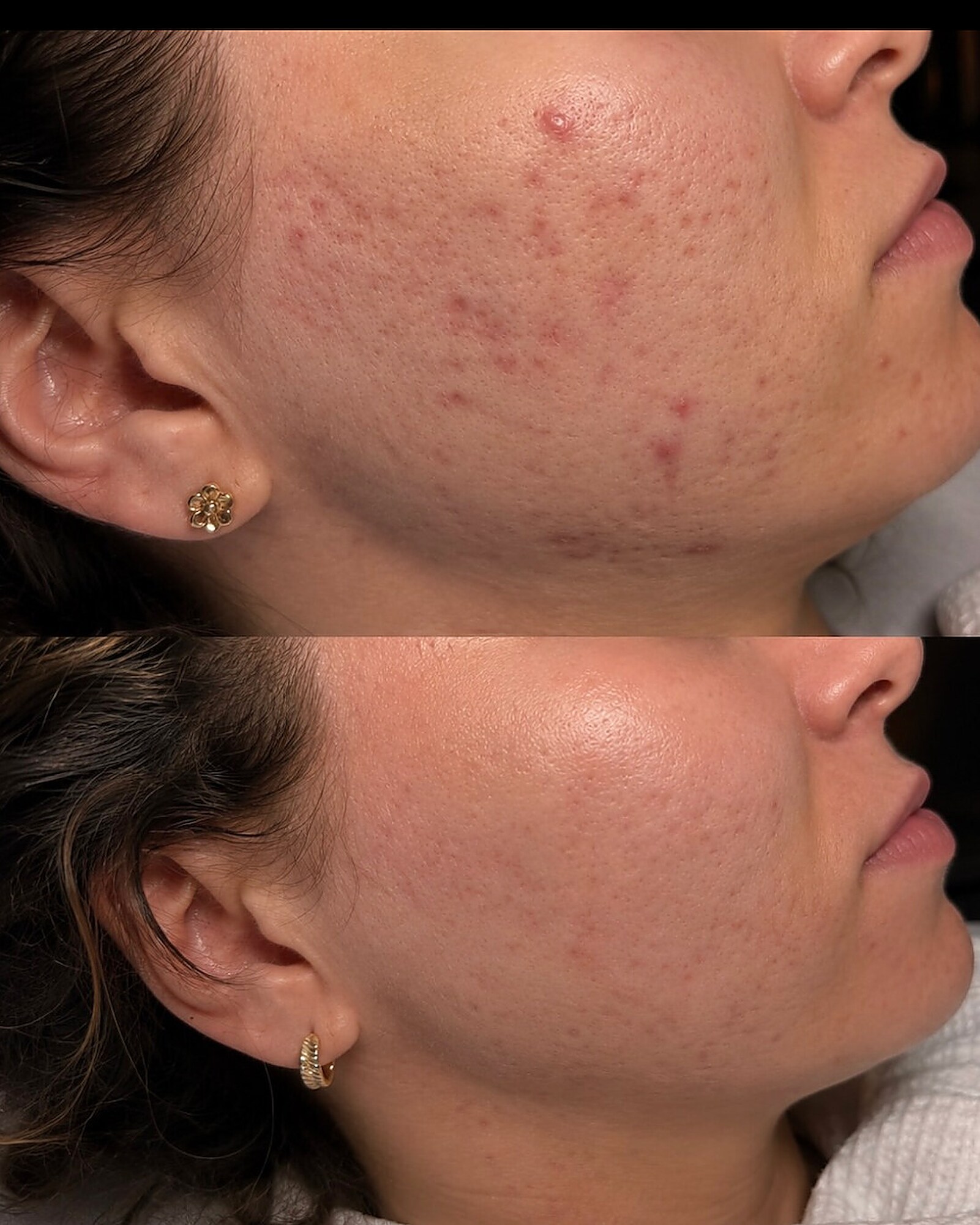
The photograph shows skin after a series of sessions, shared with the client's consent. Individual results vary.
Five common types of acne
Whiteheads
Small, closed bumps that form when a pore clogs with oil and dead skin but stays covered. They tend to respond well to gentle, consistent exfoliation.
Blackheads
Like whiteheads, but the pore stays open, so the trapped oil oxidises and darkens at the surface. Regular professional extractions and exfoliation keep them from building up.
Papules
Small, inflamed, reddish bumps with no visible head, caused by irritation deeper in the pore. Often tender, they need a calmer, less abrasive approach than surface breakouts.
Pustules
What most people picture as a pimple: inflamed, with a white or yellow centre. Picking or over-treating them raises the chance of marks being left behind.
Cystic and nodular acne
Larger, deeper and often painful bumps under the skin's surface. They benefit most from a professional assessment, and severe or persistent cases are often best co-managed with a dermatologist.
Where to start
Every signature facial starts with a real skin analysis, so whatever kind of breakout you have, the treatment that follows fits it.
Get a plan built for your skin
Book a skin analysis and we will match the treatment to your breakouts.